The best 35mm lens choice
35mm Lens Comparison, Which 35mm Is Right for You?
The 35mm focal length has a reputation for a reason. It sits just slightly wider than natural human vision, which makes images feel familiar and grounded. That is why photographers like Lee Friedlander, Martin Parr, and Vivian Maier relied on it so heavily.
But not all 35mm lenses feel the same.
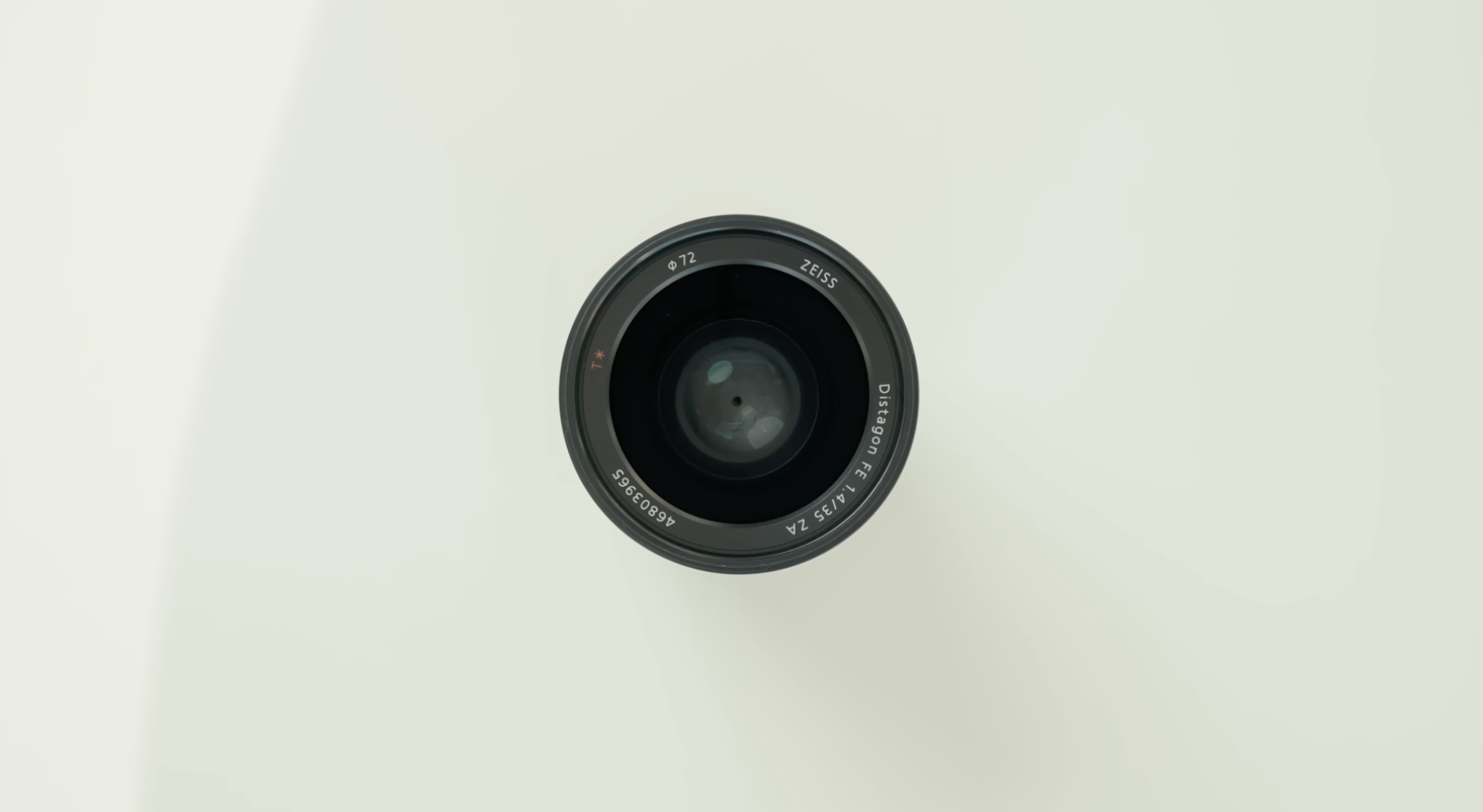
In this breakdown, we compare three ways of shooting 35mm on Sony, the Sony 35mm f/1.8, the Zeiss Distagon 35mm f/1.4, and a 24–70mm G Master zoom set to 35mm. The goal is not to crown a winner, but to help you understand which one actually fits how you shoot.
1. Size and Weight Matter More Than You Think
The first difference you notice is physical.
The Sony 35mm f/1.8 is significantly lighter and smaller than the Zeiss Distagon. If you care about portability, long shooting days, or travel, this is not a minor detail. Weight affects how often a lens leaves the house.
The Distagon feels solid and premium, but it is heavy enough that it changes how and when you use it.
2. Specs Tell Part of the Story
On paper, the newer Sony lens looks like the obvious choice.
- Sony 35mm f/1.8
Lighter and smaller
Faster and quieter linear autofocus motors
Minimum focus distance of 0.22m
Custom button and AF/MF switch - Zeiss Distagon 35mm f/1.4
Wider maximum aperture at f/1.4
Zeiss coatings
Longer minimum focus distance
Clickable or de-clickable aperture ring
Neither lens has built-in stabilization, and both offer autofocus. The real difference is not the numbers, it is how they render images.
3. Color and Rendering Are Where Things Separate
Shooting raw files outdoors under the same conditions revealed clear differences.
The Sony 35mm f/1.8 produces clean, sharp images with brighter exposure and modern contrast. Colors are accurate and predictable.
The Distagon leans cooler and often appears slightly wider, even when framed identically. Skin tones have a softer quality, and images carry more character. There is a look to it that is hard to quantify but easy to see.
This is where personal taste starts to matter more than specs.
4. Sharpness Is Not the Whole Story
Wide open, both lenses show compromises.
The Distagon at f/1.4 is softer than expected, especially at distance. It is not unusable, but it is not razor sharp either.
The Sony f/1.8 is slightly sharper wide open, though still not perfect. Stopping either lens down improves results quickly.
The takeaway here is simple. Sharpness alone should not drive your decision, especially if you rarely shoot wide open.
5. Autofocus Performance Is a Generational Gap
The Sony 35mm f/1.8 uses modern linear motors, and it shows.
Autofocus is faster, quieter, and more reliable with moving subjects. The Distagon holds up surprisingly well for a decade-old lens, but it cannot match the newer motor design.
If you shoot video, action, or rely heavily on continuous autofocus, this matters.
6. The Zoom Lens Reality Check
The 24–70mm G Master at 35mm delivers excellent color, sharpness, and consistency. It also costs more, weighs more, and only opens to f/2.8.
It proves a useful point. Zooms are incredibly capable, but they do not replace the shooting experience or character of a prime lens.
7. Price Changes the Conversation
At the time of recording:
- Sony 35mm f/1.8 sits around the mid-range price point
- Zeiss Distagon often costs nearly double on the used market
- The G Master costs significantly more
Used copies of the Distagon exist, but quality varies, and known issues like the fragile lens hood are worth factoring in.
8. Which One Should You Actually Buy?
Choose the Sony 35mm f/1.8 if you want:
- Lightweight and compact gear
- Fast, reliable autofocus
- Clean, modern rendering
- A strong everyday lens
Choose the Zeiss Distagon 35mm f/1.4 if you want:
- Character and personality in your images
- Richer skin tones and unique rendering
- An aperture ring and tactile shooting experience
- A lens that feels distinct rather than perfect
There is no wrong answer. Only trade-offs.
Final Thoughts
Lens choice is subjective. Some people do not even like 35mm. Others build their entire style around it.
The newer Sony lens is practical, efficient, and easy to recommend. The Distagon is heavier, older, and less convenient, but it brings something extra to the image that modern lenses often smooth away.
If you value character and do not mind the weight or cost, the Distagon still holds its ground. If you want simplicity and reliability, the Sony f/1.8 makes more sense.